


Posted on Friday July 17, 2026
What changes when your mobility changes?
For many people, the answer feels like everything. But for Henry Henscheid, he learned something different.
Diagnosed with cerebral palsy at birth in 1952, his parents were told he wasn’t going to go anywhere or do anything, but Henry has spent his lifetime adapting to change. Along the way, one lesson has stayed with him: change is inevitable, but losing what matters most isn’t.
Henry never let his disability hold him back. He went to college at Boise State University, then went on to graduate school at the University of Idaho, where he received his master’s degree.
That’s where his work in accessibility began.
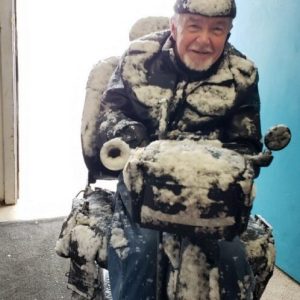
In 1976, he and the local chapter of the National Rehabilitation Association took on the task of creating public education activities to help able-bodied university students understand just how inaccessible the campus was. The event was called the Greatest Show in the Dome. Contestants would participate in events like a blind man’s maze, a wheelchair maze, even a wheelchair ramp climb and uphill race.
The news clipping from the Idaho Argonaut newspaper below shares more details.
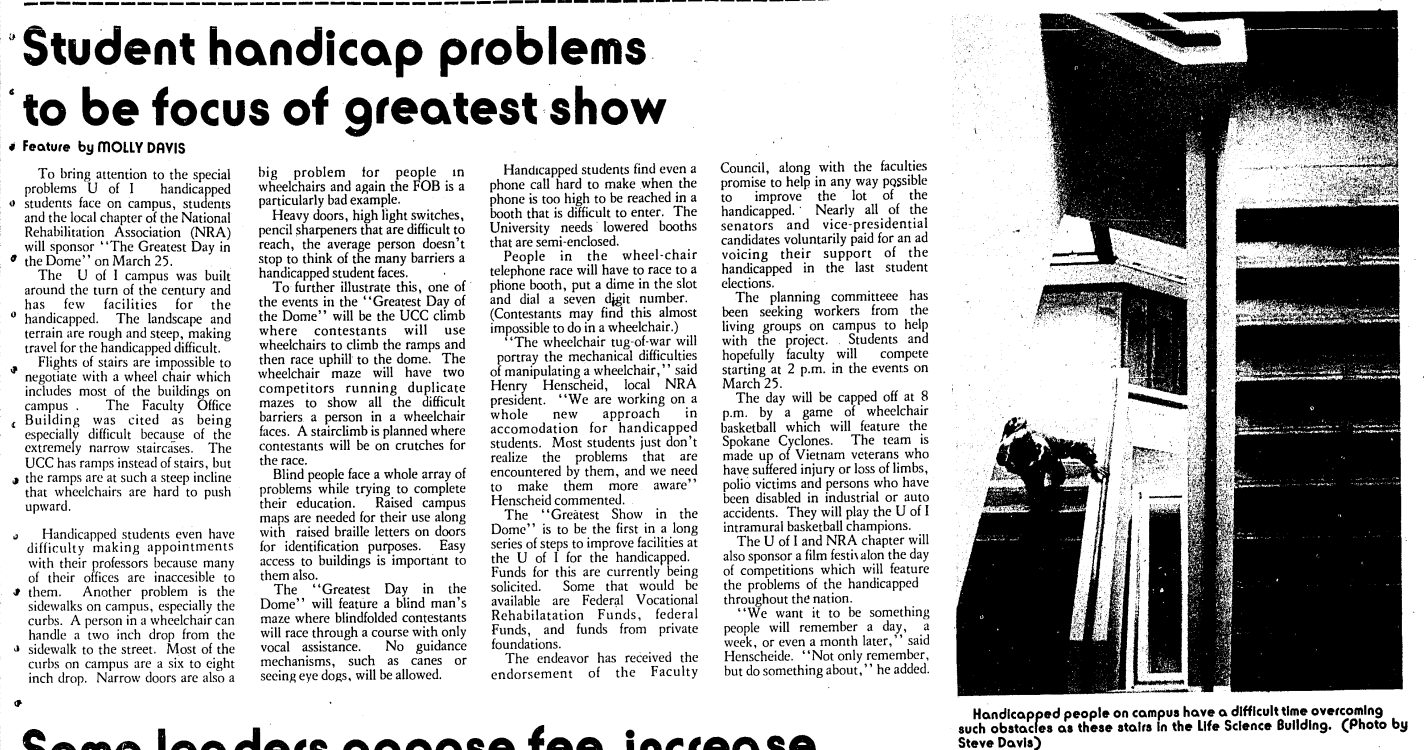
For a larger version, click here: Idaho Argonaut Newspaper March 23, 1976
“At the end of that day’s competition, we had a regulation wheelchair basketball game. A regulation wheelchair team came down, and they played against the university’s basketball champions,” Henry said. “In the third quarter, one of the university players couldn’t deal with the fact that he was getting stomped by a team of people with disabilities, and he jumped out of his wheelchair, ran down the court, and got a stuff shot. And I was on the microphone, and I simply said, ‘Enough said. You just saw the reason we do all this; that’s why we’re here.’ And the place went crazy.”
After graduation, he initially went to work in counseling because he loves people, but in 1978, he relocated to San Fransico, CA, where he worked diligently on Americans with Disabilities Act compliance, training, and enforcement. He was responsible for initiating and developing a statewide compliance mechanism for the ADA.
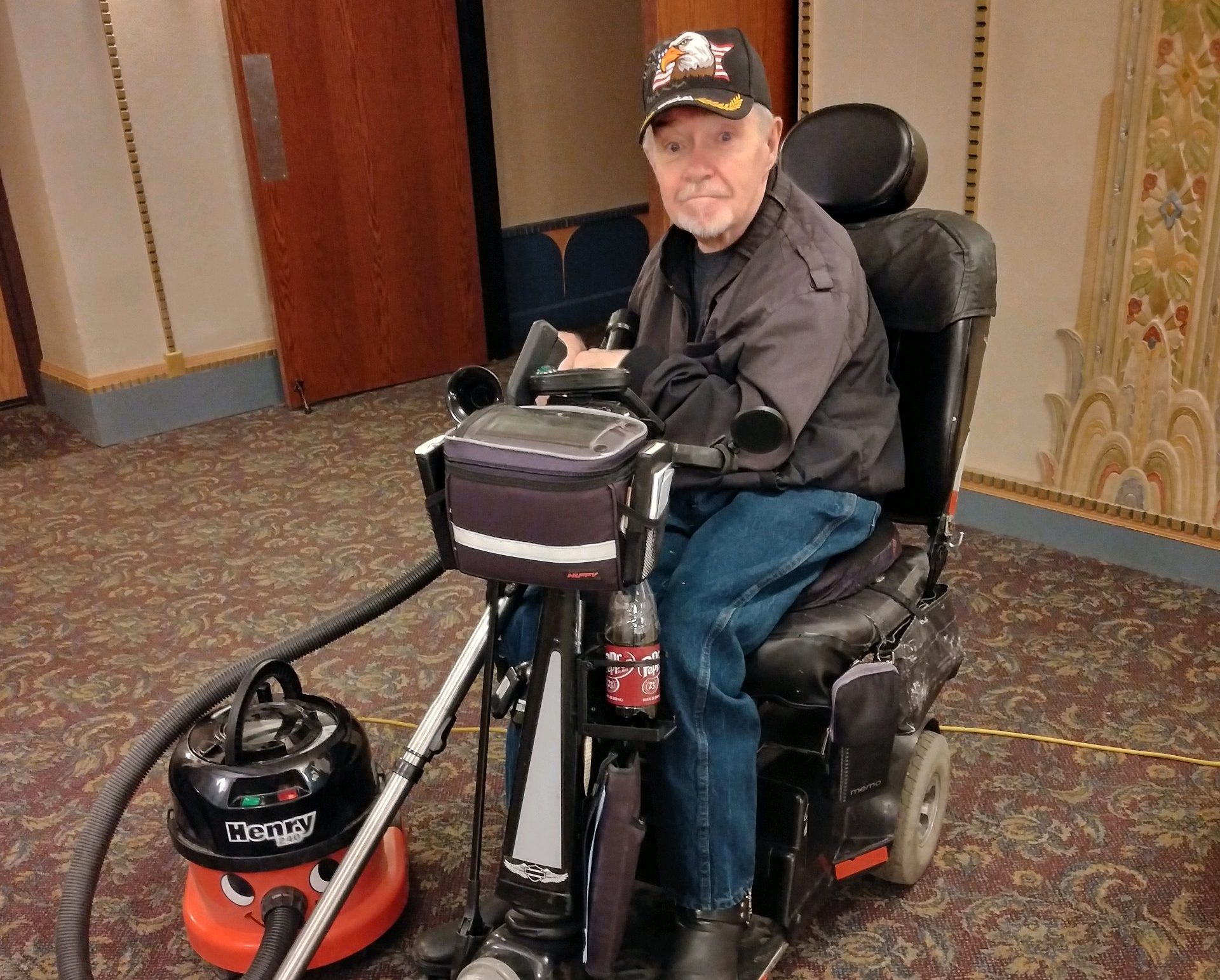
It was while he was there that he got his first Amigo, and Henry said he used it for about 20 years until he needed a new one. But before he got that new Amigo, the dealer he worked with, Phil, gave him some food for thought.
“The first thing he said was, ‘I’m not going to sell you anything, I’m not going to show you anything. I want to ask you first, Henry, how do you want to live?’ I even get choked up when I tell that story because he just nailed it,” Henry reflected.
How did Henry want to live? Without fear. He shared that his mom always said there were two things to know about him: he is easy to talk to, and he has no fear.
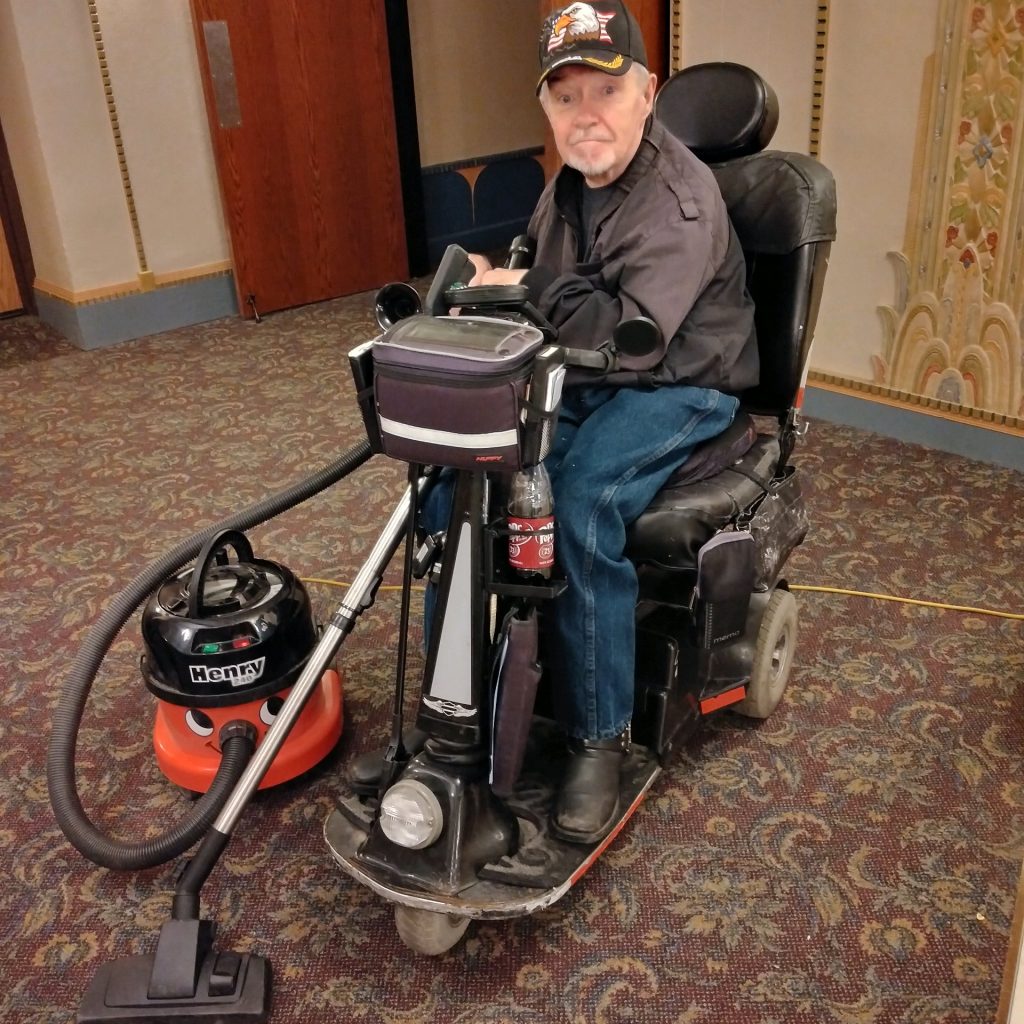
“You find what you want to do, where you want to go, whether it’s easy or hard, you just do it anyway. I’ve said I don’t do things because I can’t; I can because I do things. And people out there might say, ‘Well, I didn’t know anybody could do that.’ I didn’t either; I just did it. That’s scary. But if you only do the safe stuff, you’re not going to do much. You just have to trust yourself,” he said.
Henry explained that for him, the two greatest impediments when it comes to living with a disability are time and energy. And that’s why he came to appreciate his Amigo so much.
“The Amigo has been just absolutely critical and essential in my world. It gives me the opportunity to do all kinds of crazy and great, wonderful things. A lot of that deals with travel and doing things that a lot of people wouldn’t think would be possible,” Henry said. “But the Amigo has made that part of my world possible, and I’m just grateful for that.”
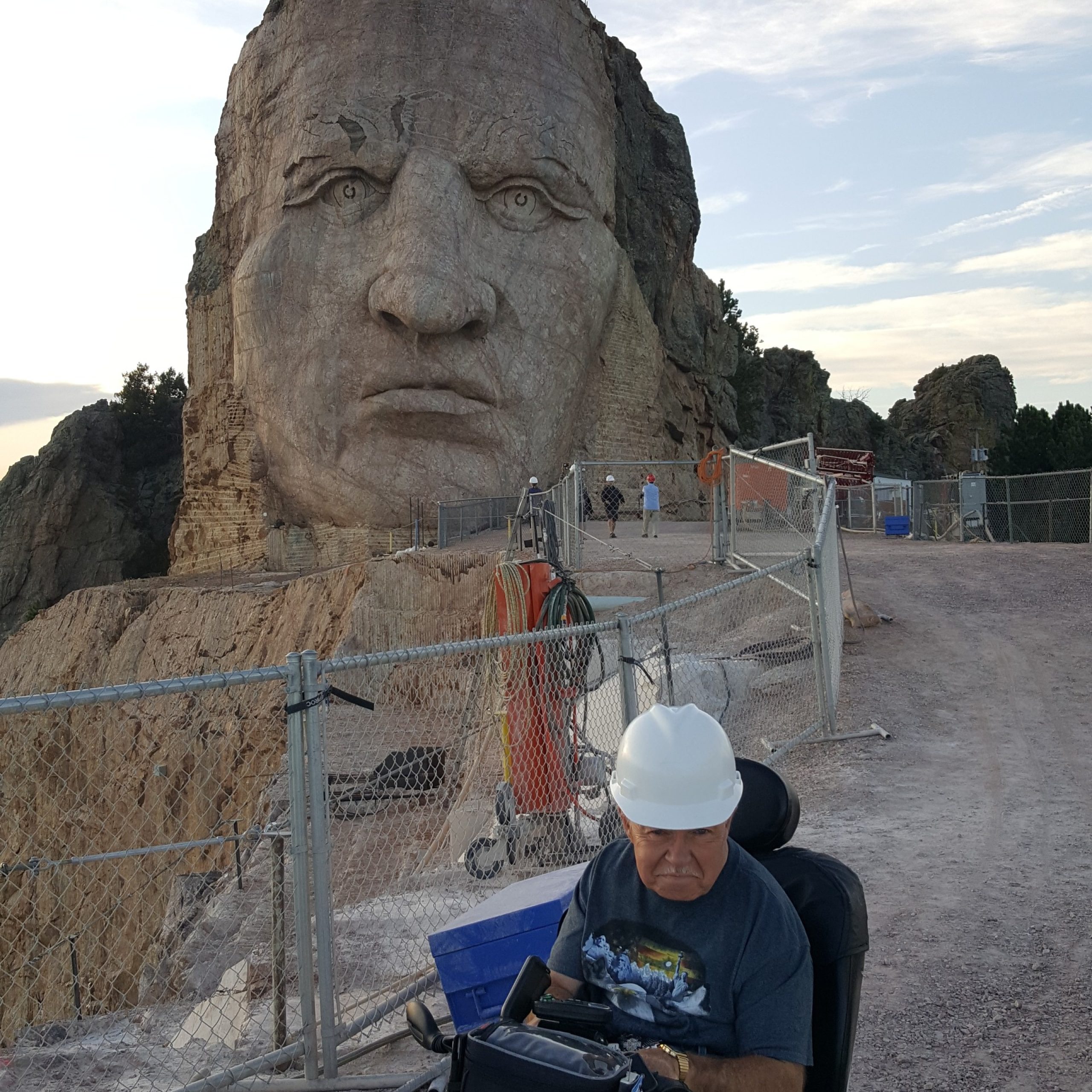
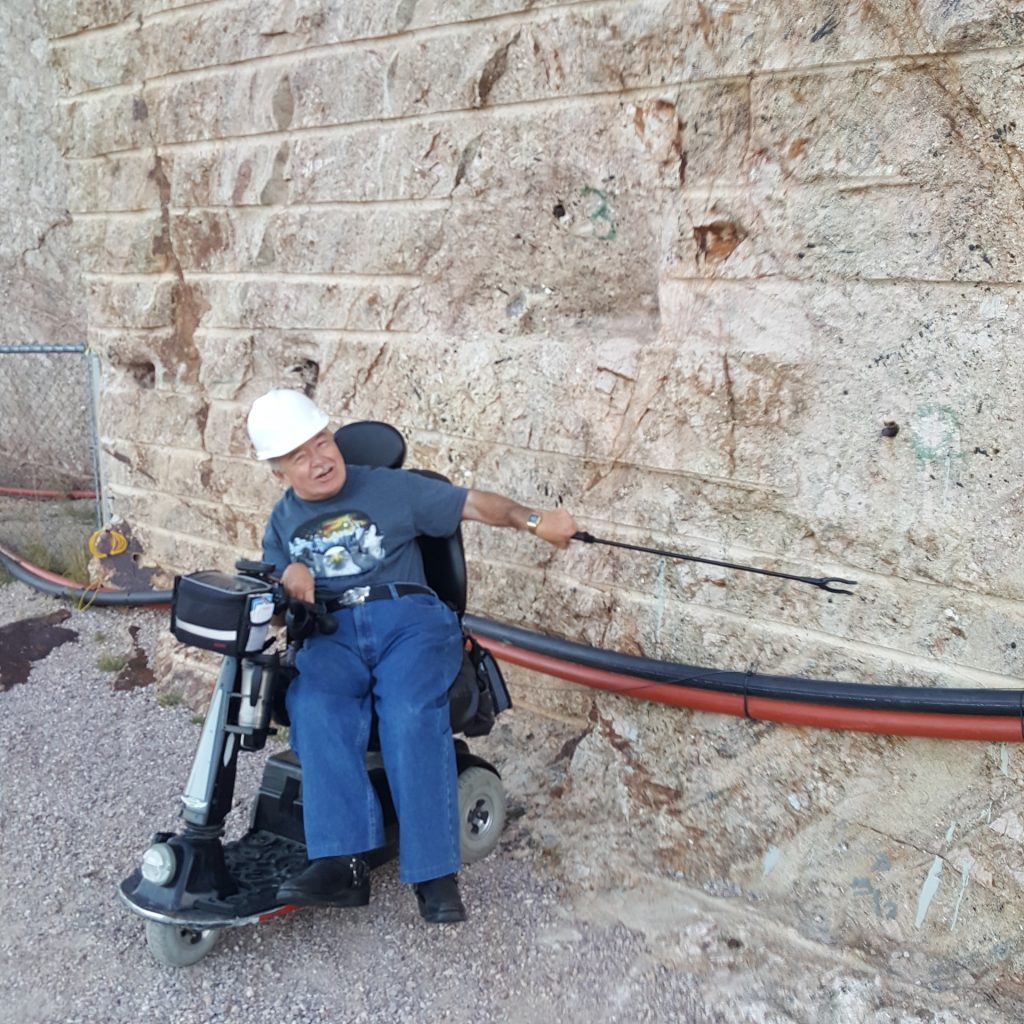
Henry’s favorite trip was a solo excursion to Washington, D.C., where he visited his brother who was stationed at the Pentagon. He visited all the classic sites there and created some of his most cherished memories, all thanks to his Amigo (plus 50 cents a gallon for gas!).
Henry also traveled a lot for his career. It took him from California to North Dakota, and eventually back to Idaho, where he has spent the past 27 years working as a certified court mediator. Along the way, he built a life centered on helping people, exploring new places, and saying yes to opportunities others assumed weren’t possible.
However, the lesson that has stayed with him the longest didn’t come from his career or his travels. It came from a conversation he had with his mom. She is 94 years old, and Henry said things have gotten hard for her — they took away her keys along with some of the independence she’d always known.
“She’s still a bright, shining light in so many ways. But one thing I said to her was, ‘Mom, yeah, some things are different, and sometimes you change, but not everything does,’” he reflected. “The important stuff in your life doesn’t change. Your friends don’t change. Your hopes don’t change. How you get there might change, like needing an Amigo, but the important stuff doesn’t.”
For Henry, change has never been a reason to stop doing the things that give his life meaning. And when a challenge comes his way, he reminds himself to stop, breathe, and trust himself.